
How Local Citations Build Trust Before a Customer Ever Calls You
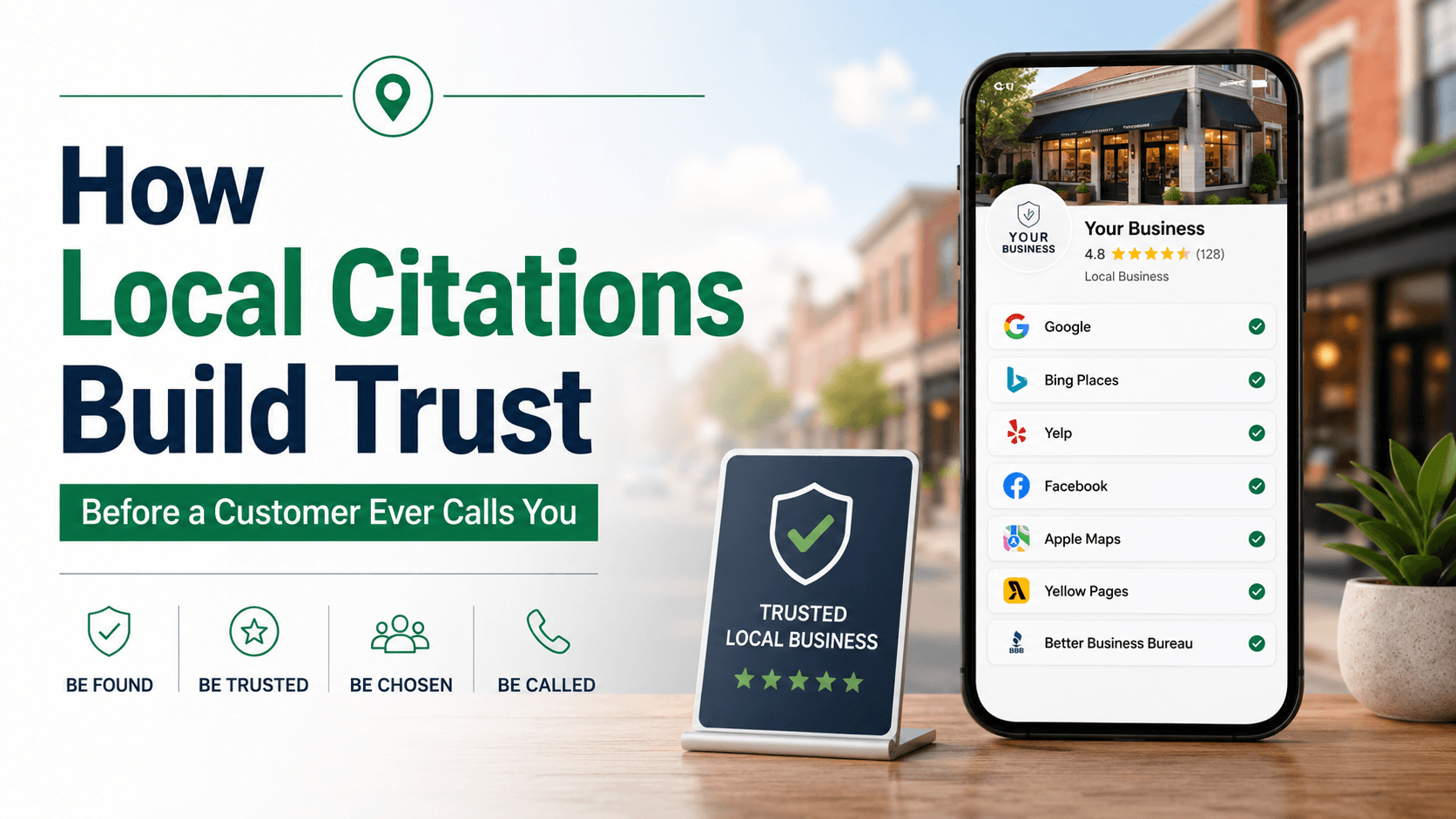
Picture someone searching for a plumber at eleven at night because a pipe just burst under the kitchen sink. They pull up three or four options, and without really thinking about it, they start cross-checking each one: does the phone number on this website match the one on that directory listing? Is the address the same everywhere? Are the hours consistent? Most people never realize they’re doing this, but it happens in seconds, and it quietly decides who gets the call.
That quiet background check is exactly what a business citation supports. It’s not glamorous, and it rarely gets talked about the way social media or paid ads do, but citation consistency is one of the most reliable ways a small business earns trust before a customer ever picks up the phone.
What a Citation Actually Is
A citation is simply any online mention of your business name, address, and phone number, often shortened to NAP. It can appear on a directory page, a local business listing, a chamber of commerce site, or even a news article that lists your contact details. Search engines and AI-driven search tools use these mentions to confirm that a business is real, active, and located where it says it is.
Think of it less as a marketing tool and more as a verification system. The more places confirm the same core facts about your business, the easier it becomes for both people and algorithms to trust that information.
Why Inconsistency Quietly Costs You Customers
Here’s the part that surprises a lot of business owners: it’s rarely one big mistake that causes problems. It’s small drift over time. A phone number changes when you switch carriers. An old suite number lingers on a directory you forgot existed. Your business name is listed as “Smith Plumbing LLC” on one site and just “Smith Plumbing” on another.
Individually, none of that seems like a big deal. But when a potential customer notices the mismatch, even subconsciously, hesitation creeps in. Search engines pick up on the same inconsistency, which can make it harder for your listing to be treated as a dependable source of information.
Building a Citation Profile You Can Trust
Start with an audit. Search your business name and look at what comes up across directories, review sites, and local listings. Note anywhere your name, address, or phone number doesn’t match your current information exactly.
From there, prioritize the listings that get real traffic and claim the ones that let you control the details, like your Google Business Profile. A trusted business directory such as findbiz.live works the same way in miniature: a clean, accurate, up-to-date listing gives someone doing that late-night comparison one more consistent, reliable reference point instead of one more reason to second-guess you.
Conclusion
Trust with local customers isn’t built in one dramatic moment. It’s built in a series of small confirmations, the kind that happen before someone ever dials your number. Getting your citations right won’t make headlines, but it removes the friction that quietly costs businesses customers every single day.
Frequently Asked Questions
Any online listing that includes your business name, address, and phone number counts as a citation. That includes directories, review platforms, industry associations, and local news mentions. The key factor isn't where it appears, but whether the details match your current information exactly.
There's no magic number. What matters more is accuracy and relevance. A handful of well-maintained, industry-relevant listings will serve you better than dozens of outdated or irrelevant ones scattered across the internet with mismatched details.
Yes. If other sites list an old address or wrong phone number, customers and search engines may still encounter that outdated information. A strong Google Business Profile helps, but it doesn't erase conflicting data living elsewhere online.
A quarterly check is a reasonable habit for most small businesses, and immediately after any change to your name, address, phone number, or hours. Businesses that move locations or rebrand should audit citations right away rather than waiting.
Often, yes. Many directories include a link back to your website alongside your citation. Beyond any SEO value, that link also sends real referral traffic from people actively browsing for a business exactly like yours.